Research Ethics & Ethical, Legal & Social Issues
October 29, 2026 | 3:00 - 4:30 pm | Online
Frontiers in Synthetic Biology: SpudCells, Mirror Life & Societal Implications
Kate Adamala, PhD, Associate Professor in the Department of Genetics, Cell Biology, and Development, University of Minnesota
R. Alta Charo, JD, Warren P. Knowles Professor Emerita of Law and Bioethics, University of Wisconsin
Michael J. Imperiale, PhD, Arthur F. Thurnau Professor Emeritus of Microbiology and Immunology, University of Michigan
Revolutionary advances in cell engineering and synthetic biology offer enormous potential benefits, while raising vexing ethical and policy issues. A team at the University of Minnesota has developed SpudCell — the first synthetic cell that can grow and reproduce, built from non-living chemicals. Scientists at Stanford and Arc Institute recently published on their successful use of AI to design new virus genomes. However, scientists have cautioned against creating organisms with molecules that are the mirror image of the biological components of known life, as existing organisms would have no immune defenses. Join three experts on synthetic biology, biosecurity, and bioethics to explore how to realize the promise of synthetic biology while controlling potential risks.
Registration | Symposium information with speaker biographies
Sponsored by the University of Minnesota Consortium on Law and Values
^^^
March 4, 2027 | In-person at Wyndham Grand Pittsburgh Downtown (600 Commonwealth Place, Pittsburgh, PA, 15222)
Research Integrity Scholars and Educators (RISE) 2026 Symposium
In advance of the Association for Practical and Professional Ethics conference, RISE will meet with the theme of ethical “engagement’ in research. Proposals for presentations as part of the symposium are due October 5.
Information regarding submissions
Supported, in part, by the University of Pittsburgh Research, Ethics and Society Initiative.
Bioethics, Health Humanities, Health Policy & Clinical Ethics
September 24, 2026 | 6:30 - 8:00 pm | Online
FAITH DID WHAT? Faith Sommerfield’s (Final) Trip to Switzerland
Margaret “Peggy” Battin, PhD, MFA, Distinguished Professor Emeritus of Philosophy, University of Utah
In 2022, at the age of 82, Faith Sommerfield took a private jet to a clinic in Switzerland to bring her life to an end.
She did what? Was she crazy? Was this immoral? Was it suicide? Faith wasn’t terminally ill, and she wasn’t suffering in any serious sense. These questions about what Faith did raise serious policy issues about “safeguards” embedded in Medical Aid in Dying laws in 13 U.S. states and D.C. as well as some 14 other countries, where one must be terminally ill, or enduring intolerable suffering, or, in some places, both.
This talk will explore how these safeguards are paradoxical at root, not to be discarded but reconsidered in a basic way. Drawing on personal contact, psychiatric interviews, and the Completed Life Initiative, which Faith founded, this talk explores philosophic issues around clinician-aided “preemptive” death. This may explain why, and when, Faith Sommerfield went to Switzerland to die, according to her conception of “a completed life.” She did what? She couldn’t have done it legally here in the U.S. or anywhere else in the world.
Hosted by The Completed Life Initiative in partnership with Columbia University School of Professional Studies
^^^
October 2, 2026 | Online
16th Annual Midwestern Medical Humanities Conference
This year’s conference theme is medical technologies, which includes the use of AI in medicine, though submissions on other non-technology topics are welcome. The Call for Abstracts is now available with submissions accepted through August 15 via Oxford Abstracts.
Note: faculty who would like to invite their classes should contact the conference organizers to make arrangements (medical-humanities@wmich.edu).
Sponsored by the Western Michigan University Center for the Study of Ethics in Society, Department of Philosophy, and Medical Humanities Workgroup
^^^
October 13, 2026 | 8:00 - 9:00 am | Online
Able to Be an American
Hannah Zaves-Greene, Ph. D. Co-founder and president, Society for Jewish & Disability Studies. Director of Partnerships, Affiliations, and Outreach, Disability History Association
Details and registration information forthcoming; Continuing Medical Education and Outside the Classroom Curriculum credit available
Sponsored by the Institute for Bioethics, Department of Religious Studies, and Jewish Studies Program
^^^
October 14 - 17, 2026 | JW Marriott Indianapolis, Indiana
American Society for Bioethics & Humanities 2026 Annual Conference
Bioethics and the health humanities are evolving fields, in conversation with medical and social changes. While clinicians, academics, and other healthcare professionals continue to grapple with key ethical questions, such as end-of-life conflicts, ethical research design, and health disparities, the bioethics and health humanities communities also respond to an ever-changing political landscape that has tested the strength of our institutions and policies. This conference will address questions such as: Where do we go from here? How do we continue to advocate for humanistic and ethical care as we respond to systemic changes? What broad-reaching effects does the changing regulatory landscape have on our work and particularly on vulnerable communities? How do we move forward in medicine and humanities disciplines also facing scrutiny?
^^^
November 2, 2026 | Noon - 1:00 pm | Online
A Conversation about The Cost of Care with Nurse and Author Theresa Brown
Theresa Brown, RN, PhD, a New York Times bestselling author and oncology nurse, in conversation with Lisa S. Parker, PhD, Dickie, McCamey & Chilcote Professor of Bioethics, University of Pittsburgh
Dr. Brown embedded with nurses in four key areas of healthcare across the human lifespan—maternity, primary, elder, and hospice services—in settings across the US. Her goal was to discover what healthcare institutions are doing well to put patients’ needs at the center of their services, support their staff, and make care affordable. This conversation will explore Dr. Brown’s research methods and the findings she presents in her fourth book, published in October 2026.
Registration details forthcoming
Sponsored by the Research, Ethics and Society Initiative of Pitt Research, School of Health and Rehabilitation Sciences, Master of Arts Program in Bioethics, and Center for Research Ethics
^^^
November 10, 2026 | 8:00 - 9:00 am | Online
Human Clinicians and Chaplains in the Age of AI
Rev. Gaea Thompson, Manager, Pastoral Care Department, UPMC Presbyterian
Jonathan Weinkle, MD, FAAP, FACP, Chief Medical Officer, Squirrel Hill Health Center/Clinical Assistant Professor of Family Medicine, University of Pittsburgh.
Mary Moon, MD candidate, University of Pittsburgh (Moderator)
Details and registration information forthcoming; Continuing Medical Education and Outside the Classroom Curriculum credit available
Sponsored by the Institute for Bioethics, Department of Religious Studies, and Jewish Studies Program
^^^
November 12 - 14, 2026 | In-person in the Baron-Forness Library at PennWest University in Edinboro, Pennsylvania
2nd Biennial Conference on Global Bioethics
Sponsored by Duquesne University’s Center for Global Health Ethics and PennWest University’s James F. Drane Bioethics Institute
^^^
November 16, 2026 | 5:00 - 6:30 pm (tentative time) | HSLS Gallery, Scaife Hall
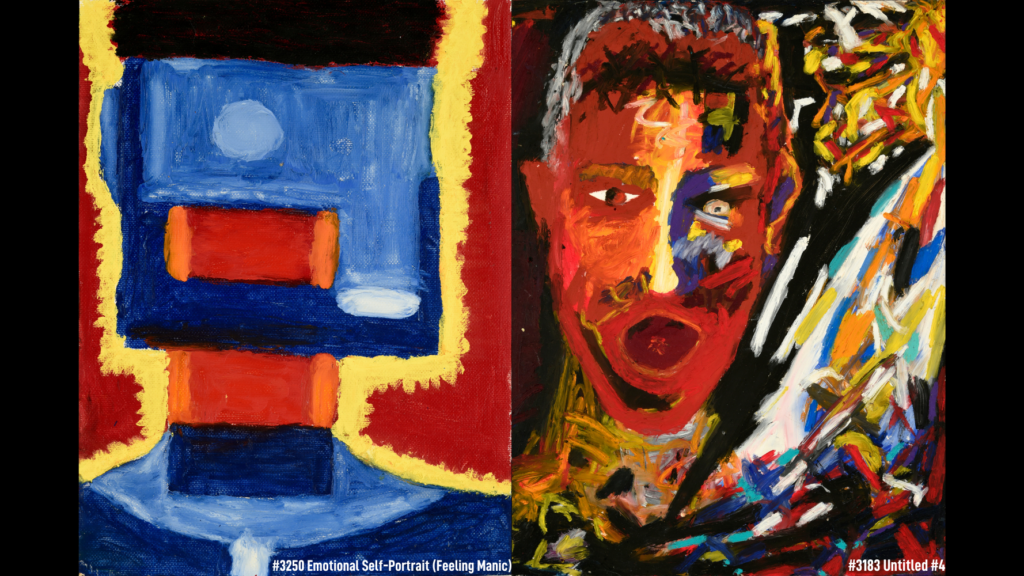
Art All Night: Artistic Expression of Bipolar Disorder — Opening and Reception
All are welcome to join this official opening of an exhibit of the work of self-taught New York artist Norman Klenicki. The artist, who now resides in Connecticut, will join for this opening reception, as well as for the November 17 concert celebrating his work and exploring its themes (see below). For many years, Klenicki has used his artwork to express his experience of emotional distress, eventually diagnosed as bipolar disorder, and his treatment odyssey. Producing his art, often all night, has soothed his symptoms and resulted in a striking body of work that prompts discussion of mental illness, its causes, and its treatment. Joining Klenicki for this opening will be the show’s curator, Bridget Keown. The exhibit will have its “soft opening” in late-October and be on display through January 2027.
Contact for additional information: PittResearchEthics@pitt.edu
^^^
November 17, 2026| 7:00 - 8:30 pm | The Chapel @ Chatham University, 1103 Woodland Rd, Pittsburgh, PA
Suppression and Expression: A Concert Exploring Art, Mental Health, and Inter-generational Trauma
The REgenerate Music Project performs music of composers labeled degenerate artists and suppressed by the Nazis in 20th Century Germany. The string quartet, comprising musicians of the Pittsburgh Symphony Orchestra, seeks to keep those composers’ music alive and to honor their lives. In this concert, the quartet will perform pieces that resonate with the artwork of Norman Klenicki, a self-taught artist and son of Holocaust survivors, who uses his visual art to express and address the symptoms of his bipolar disorder triggered by the legacy of injuries his mother incurred at the hands of Nazi death camp guards. In 2019, the University of Pittsburgh Center for Bioethics & Health Law created a virtual exhibition of his artwork: Experience, Integration, Expression: The Work of Norman Klenicki. In Fall 2026, the same curator is mounting an in-person exhibit of Klenicki’s work in the gallery space of Scaife Hall, accessed from the Mezzanine (enter at Terrace and Lothrop Streets). This concert celebrates the opening of that exhibit and the role of music and visual art in expressing and addressing the mental health challenges of inter-generational trauma.
The concert and parking are free.
Contact for additional information: PittResearchEthics@pitt.edu
^^^
December 8, 2026 | 8:00 - 9:00 am | Online
'What Makes a Good Physician' in a Medieval Arabic Text
Sami Saher Ahmad, MD/PhD candidate and co-president of the Good Doctor student group, University of Pittsburgh
Details and registration information forthcoming; Continuing Medical Education and Outside the Classroom Curriculum credit available
Sponsored by the Institute for Bioethics, Department of Religious Studies, and Jewish Studies Program
^^^
January 12, 2027 | 8:00 - 9:00 am | Online
The Neglected Soul: Ancient Monastic Teachings on Depression for the Modern World
Daniel Ibraheem, MD candidate, Yale University School of Medicine
Andreh Labib, DO candidate, Duquesne University College of Osteopathic Medicine
Details and registration information forthcoming; Continuing Medical Education and Outside the Classroom Curriculum credit available
Sponsored by the Institute for Bioethics, Department of Religious Studies, and Jewish Studies Program
^^^
February 9, 2027 | 8:00 - 9:00 am | Online
Wayfaring: A Christian Approach to Mental Health Care
Warren Kinghorn, MD, ThD, Esther Colliflower Professor of the Practice of Pastoral and Moral Theology; Co-Director, Theology, Medicine, and Culture Initiative; Professor of Psychiatry; Duke University Medical Center
Details and registration information forthcoming; Continuing Medical Education and Outside the Classroom Curriculum credit available
Sponsored by the Institute for Bioethics, Department of Religious Studies, and Jewish Studies Program
^^^
March 4 - 7, 2027 | In-person at Wyndham Grand Pittsburgh Downtown (600 Commonwealth Place, Pittsburgh, PA, 15222)
36th Annual Conference of the Association of Practical and Professional Ethics
This APPE conference invites participants from all fields of applied, practical, and professional ethics. Session formats include plenary keynote talks, paper presentations, panels, case study discussions, pedagogical demonstrations, and author meets critics sessions. This year’s theme, Examining Ethics and Power, invites critical reflection on the ethical dimensions of power across professional, institutional, and global contexts. We encourage proposals that explore how power dynamics shape ethical decision‑making; how power manifests in professional practices; how institutions perpetuate or prevent harm; and how ethical frameworks can clarify what is at stake as well as expose, challenge, and transform unjust power relations.
The deadline for submissions is October 5. The call for proposals is here. Monetary prizes are offered for the best paper by an early career scholar, graduate student, and undergraduate.
Several conference events are co-sponsored by the University of Pittsburgh Research, Ethics, and Society Initiative and by the Master of Arts Program in Bioethics.
^^^
March 9, 2027 | 8:00 - 9:00 am | Online
Applications of Naikan Self-Reflection to Mental Health Care
Trevor Staab, BS, University of Pittsburgh
Details and registration information forthcoming; Continuing Medical Education and Outside the Classroom Curriculum credit available
Sponsored by the Institute for Bioethics, Department of Religious Studies, and Jewish Studies Program
^^^
April 9, 2027 | 8:00 am - 3:45 pm (tentative) | Passavant Hospital Foundation Conference Center, 700 Cumberland Woods Drive, Allison Park, PA 15101, and online
Pastoral Care and Ethics Conference
Details about this free conference are forthcoming; Continuing Medical Education credit will be available; the interactive conference will feature free parking, meals, and local and national speakers.
Sponsored by Spiritual Care Services UPMC Health Services Division, University of Pittsburgh Master of Arts Program in Bioethics, and Passavant Hospital Foundation
^^^
April 13, 2027 | 8:00 - 9:00 am | Online
Let’s Talk About It: Social Work, Chaplaincy, and Bioethics in Dialogue
Panel members TBA
Details and registration information forthcoming; Continuing Medical Education and Outside the Classroom Curriculum credit available
Sponsored by the Institute for Bioethics, Department of Religious Studies, and Jewish Studies Program
^^^
May 13, 2027 | Time TBD | Venue TBD
34th Annual Healthcare Ethics Conference
Details and registration information are forthcoming.
Sponsored by the Institute for Bioethics

Sponsored by Pitt Research, this virtual exhibition demonstrates Pitt’s creativity and leadership in public communication of science and technology. With a Pitt Seed grant and science & technology studies scholar Hannah Starr Rogers, curator and science communication expert Elizabeth Pitts (Department of English) created the exhibit of ten artists/artist groups to inquire: What do we want from biotechnologies? Who is biotechnology for? Who decides?
In 2020, Pitt’s Center for Bioethics & Health Law mounted a virtual exhibition of work by Norman Klenicki. A self-taught artist and son of Auschwitz survivors, Klenicki uses his canvases to memorialize Holocaust victims and to channel the energy and emotions he experiences as a person with bipolar disorder. The exhibition is employed in history and Jewish studies courses, as well as the health humanities. With City of Asylum, the Center hosted events exploring connections between music and mental health, and between Klenicki’s visual art and the work of jazz musicians Thelonious Monk and Charles Mingus. Historian and exhibit curator Bridget Keown (Gender, Sexuality , and Women’s Studies Program) leads a virtual gallery tour.